 FusionTerm
Two-factor sign-in
With two-factor sign-in, someone who learns your password still can't get in: they'd also need the 6-digit code from your phone.
Administrators must use two-factor when they sign in with a password. A new administrator sets it up right after their first sign-in, before FusionTerm opens, and can't turn it off. Everyone else sees a reminder after signing in (Remind me later hides it for a week).
Turn it on
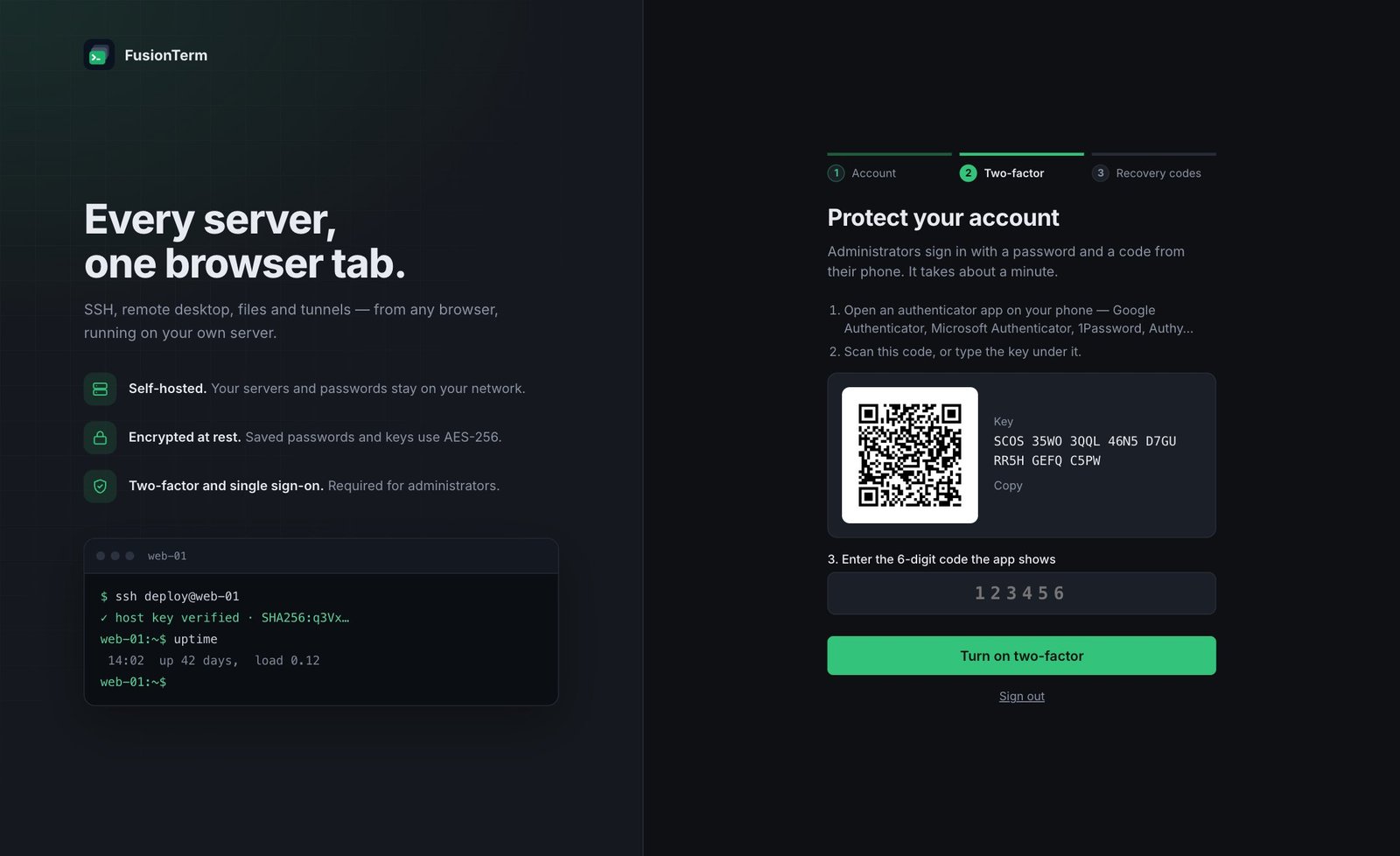
- Settings → Two-factor authentication (or Set up on the reminder).
- Scan the QR code with an authenticator app — Google Authenticator, Microsoft Authenticator, 1Password, Authy or any other.
- Type the 6-digit code the app shows to confirm.
From now on, after your password FusionTerm asks for the current code. Codes change every 30 seconds; a phone clock that's a little off still works.
Recovery codes
When you turn two-factor on, FusionTerm shows 10 recovery codes — once. Copy or download them and keep them somewhere safe, such as a password manager. Then click I've saved my recovery codes.
If you don't have your phone, click Use a recovery code on the sign-in step and type one instead of the 6-digit code. Each code works once. The two-factor page shows how many you have left; to get a fresh set, enter your password and click Get new recovery codes — the old ones stop working.
Turn it off
Settings → Two-factor authentication, then confirm with your current password. Administrators can't turn it off; to move it to a new phone, sign in with a recovery code or ask another administrator to Reset two-factor — you set it up again right after signing in.
Don't get locked out
Important: if you lose the phone with your authenticator app, sign in with a recovery code. Also turn on your authenticator app's backup or sync (most offer it).
No phone and no recovery codes? Ask an administrator: under Settings → Users → Manage, Reset two-factor turns it off for your account so you can sign in with just your password and set it up again. If you are the only administrator, whoever runs the FusionTerm server can reset your password and two-factor from the server — see Troubleshooting.
Two-factor applies to password sign-in. With single sign-on, your identity provider's own two-step check is used instead.